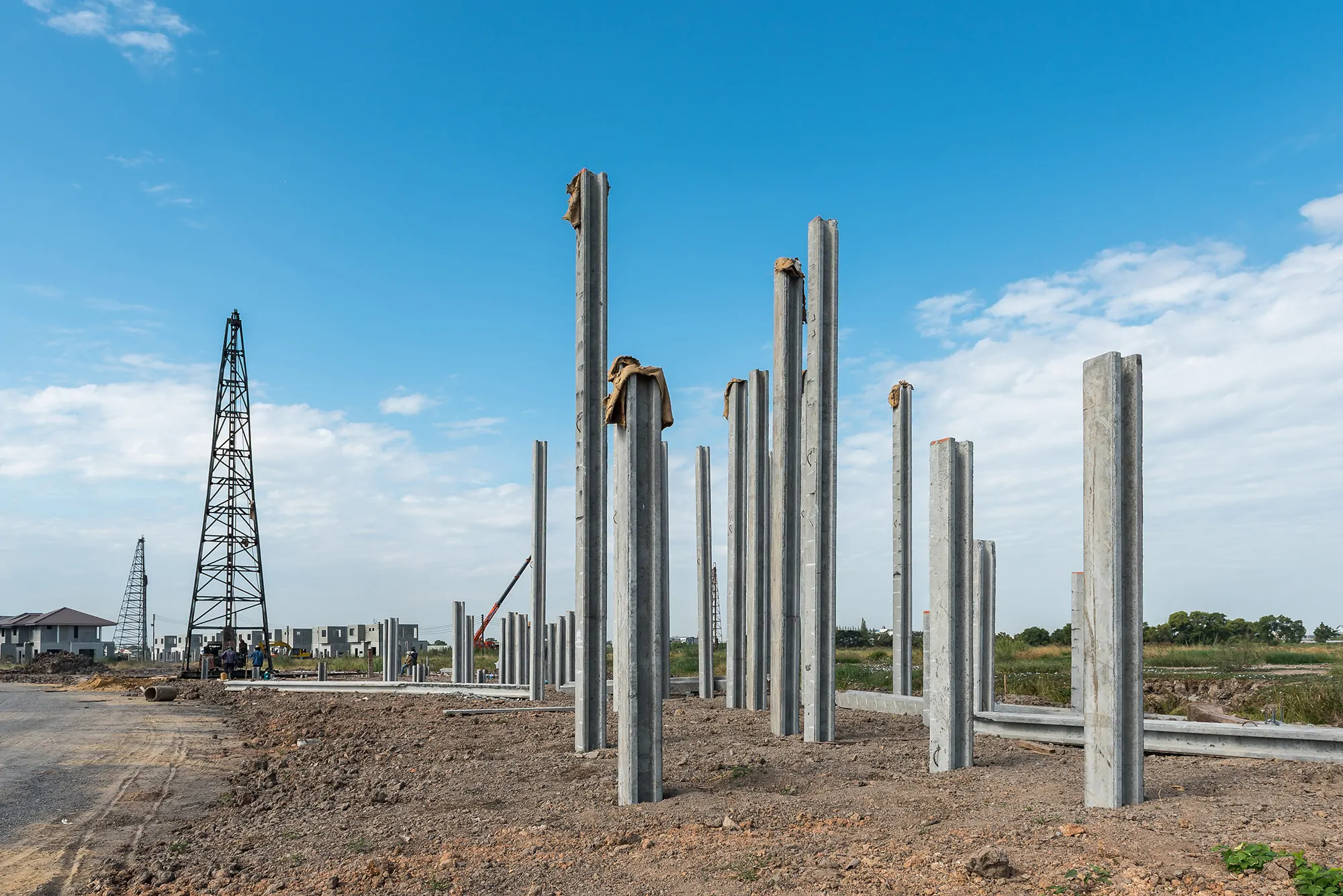
In today’s construction industry, concrete piles play a critical role in ensuring the stability, safety, and longevity of structures. As urban development expands and projects become more complex, the demand for reliable foundation solutions continues to grow. Among the most widely used options are precast concrete piles, valued for their strength, durability, and versatility across a wide range of applications.
Understanding how and where these structural elements are used can help developers, engineers, and project managers make better decisions when planning construction projects.
What Are Concrete Piles?
Concrete piles are long, slender structural elements driven deep into the ground to support buildings and infrastructure. They transfer the load of a structure from weak or unstable surface soils to deeper, stronger layers. This makes them essential in areas where the ground cannot naturally support heavy loads.
There are several types of piles, but precast concrete piles stand out due to their controlled manufacturing process. These piles are produced in a factory environment, ensuring consistent quality, precise dimensions, and high strength before being transported to the construction site.
Key Advantages of Precast Concrete Piles
The popularity of precast concrete piles comes from several important benefits:
• High load-bearing capacity
• Excellent durability and resistance to environmental factors
• Consistent quality due to factory production
• Faster installation compared to cast-in-place methods
• Reduced on-site labor and construction time
These advantages make them suitable for both small-scale projects and large infrastructure developments.
Common Uses of Concrete Piles
1. Building Foundations
One of the most common uses of concrete piles is in building foundations. In areas with soft soil, high groundwater levels, or uneven terrain, traditional shallow foundations may not provide enough support. Piles ensure that the structure’s weight is transferred to deeper, more stable soil layers.
High-rise buildings, residential complexes, and commercial properties frequently rely on precast concrete piles to maintain structural integrity over time.
2. Bridge Construction
Bridges require extremely strong and stable foundations to support heavy loads and constant movement. Concrete piles are widely used in bridge construction to anchor the structure securely into the ground or riverbed.
Because precast concrete piles are resistant to water, corrosion, and environmental stress, they are particularly suitable for bridges exposed to harsh conditions.
3. Marine and Coastal Structures
In marine environments, foundations must withstand saltwater, wave action, and fluctuating water levels. Concrete piles are commonly used in the construction of:
• Piers and docks
• Harbors and ports
• Offshore platforms
• Coastal protection structures
The durability of precast concrete piles ensures long-term performance even in aggressive environments where other materials may degrade quickly.
4. Industrial Facilities
Heavy industrial structures, such as factories, warehouses, and power plants, require foundations capable of supporting large loads and vibrations. Concrete piles provide the necessary strength and stability for these demanding applications.
Their ability to handle dynamic loads makes precast concrete piles an ideal choice for facilities with heavy machinery or constant operational movement.
5. Infrastructure Projects
Large-scale infrastructure projects rely heavily on concrete piles. These include:
• Highways and overpasses
• Railways and transit systems
• Retaining walls and embankments
• Utility structures
Using precast concrete piles helps speed up construction timelines while maintaining high structural standards.
6. Ground Stabilization and Retention
In addition to supporting structures, concrete piles are also used for ground stabilization. They can prevent soil movement, reduce settlement, and reinforce slopes or excavations.
This application is especially important in areas prone to landslides or erosion, where stability is critical for both safety and long-term performance.
Why Choose Precast Concrete Piles?
When comparing foundation solutions, precast concrete piles often emerge as the preferred option due to their reliability and efficiency. Their off-site production allows for strict quality control, while their rapid installation reduces project delays and labor costs.
Additionally, they offer excellent performance in challenging environments, including wet, corrosive, or unstable soil conditions. This makes them a dependable choice for projects where failure is not an option.
As construction demands continue to evolve, the importance of strong and reliable foundations cannot be overstated. Concrete piles remain one of the most effective solutions for transferring structural loads safely into the ground.
From residential buildings to large infrastructure developments, the versatility of precast concrete piles makes them an essential component in modern engineering. Their durability, efficiency, and adaptability ensure that they will continue to play a vital role in construction projects around the world for years to come.